Skip to content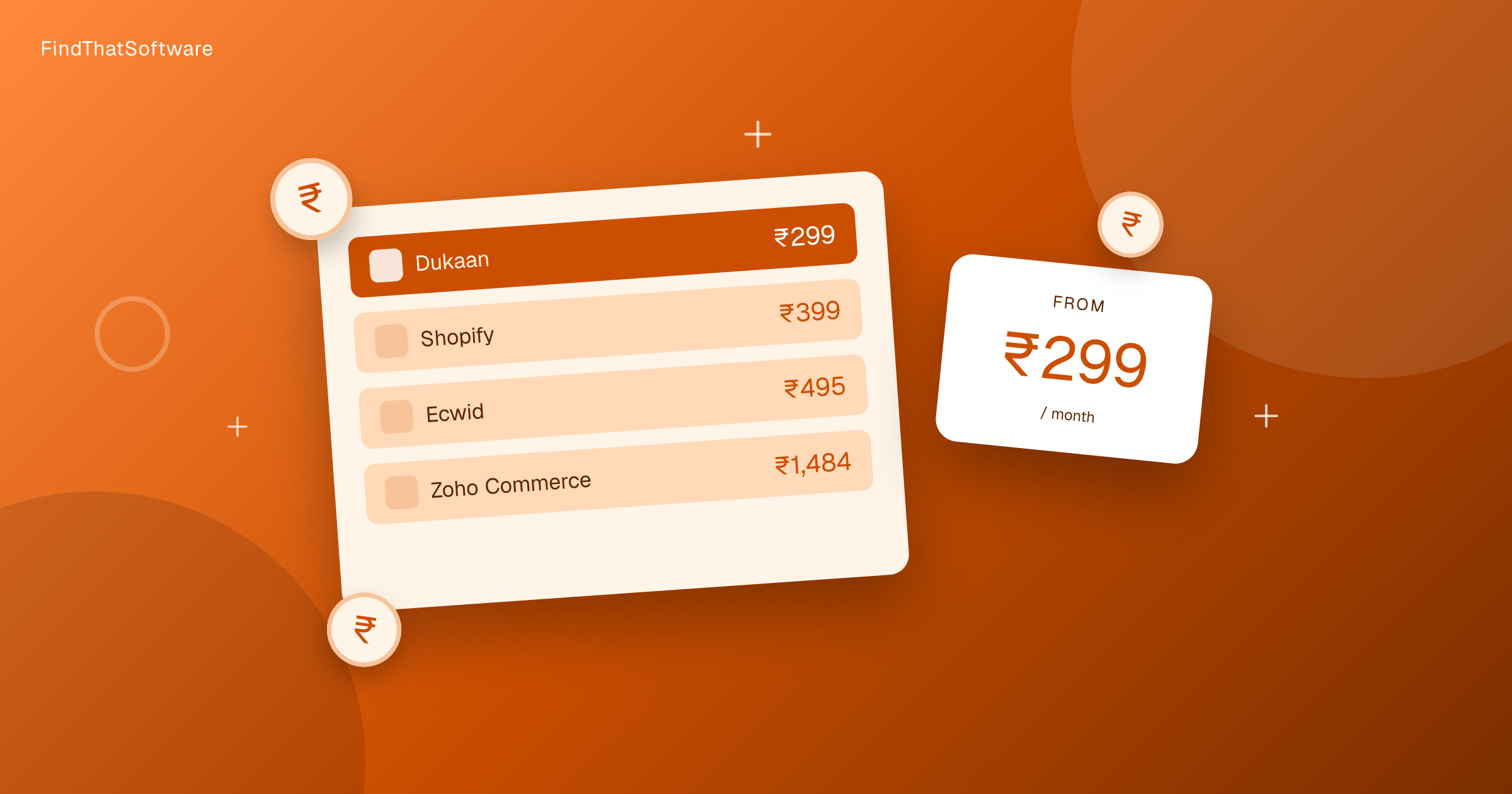

FindThatSoftwareGuides
Back to guidesE-commerceSwapnil Singh · Co-founder, FindThatSoftware
E-commerce Platform Pricing in India Compared (2026)
What an online store platform really costs an Indian seller each month, from a free plan to enterprise. Real rupee prices with the forex markup, for a registered business.
You want to sell online in India. The first question is simple. What does the platform actually cost per month?
The honest answer is that a basic online store platform runs an Indian seller anywhere from free to about Rs.15,000 a month. The gap is huge because these tools serve very different sellers. Every figure below is monthly rupees for a registered business, with forex conversion and the card forex markup applied. GST adds 18% if you cannot reclaim it, and rupee-priced tools carry no forex markup. Read our India software pricing method if you want to see how we build these.
E-commerce platform pricing in India at a glance
Entry pricing, cheapest first, per month for a registered business (forex-adjusted).
| Platform | Approx price per month | Notes |
|---|---|---|
| Dukaan | Rs.299 | India-built, rupee-priced, free plan |
| Shopify | Rs.399 | INR-priced in India, deep app ecosystem |
| Ecwid | Rs.497 | Bolts a store onto a site you already have |
| BigCommerce | Rs.2,887 | Bigger catalogs and higher order volumes |
| StoreHippo | Rs.15,000 | Enterprise B2B and D2C, built in India |
Want to sort and filter every plan yourself? Use our live e-commerce pricing page.
Already pay for one of these? Run our software savings audit to add every tool you use and see your whole stack's real India cost, plus where you could switch and save.
The platform fee is only part of the real cost
The plan price is the easy part. In India the money that actually moves is spread across a few line items that a foreign pricing guide will never mention.
First is the payment gateway. Whether you use Razorpay, PayU, or the gateway built into your platform, expect roughly 2% to 3% on every online payment. On a Rs.1,000 order that is Rs.20 to Rs.30 gone before you count anything else.
Second is cash on delivery. A large share of Indian orders still arrive as COD. That means courier COD fees and a real risk of return to origin, known as RTO. When a COD parcel comes back unsold you still pay both legs of shipping and get nothing for it.
Third is shipping itself. A store platform does not ship anything. You plug in an aggregator like Shiprocket or Delhivery and pay per shipment by weight and zone.
So the platform fee is the floor, not the ceiling. A Rs.353 plan can easily sit under a few thousand rupees of gateway, COD, and shipping cost once orders start flowing. Budget for the whole picture. Our how to start selling online in India guide walks through these steps in order.
The free option
If you are not ready to spend anything, Dukaan has a free plan. You can list products, share a store link, and take orders without paying a monthly fee. It is the lowest-risk way to test whether people will actually buy from you before you commit rupees to a paid plan. Start free, prove demand, then upgrade.
Which fits your budget
Pick by the kind of seller you are, not by the sticker price alone.
For a quick, low-cost Indian store, go with Dukaan. It is priced in rupees, understands COD and Indian shipping out of the box, and the free plan lets you start today.
For a serious brand that wants room to grow, Shopify earns its slightly higher fee through its ecosystem. The app store, themes, and integrations mean you rarely hit a wall as you scale. See our Shopify vs Dukaan vs WooCommerce breakdown for the full comparison.
For larger operations with big catalogs, high order volumes, or B2B needs, BigCommerce or StoreHippo are built for that weight. They cost far more per month, but so does the scale they support.
Browse the full e-commerce category to compare every option side by side.
The bottom line
Start with what you truly need this quarter. A first-time Indian seller does not need a Rs.15,000 plan. Begin free or near-free with Dukaan, add Shopify when the brand and volume justify it, and always budget for gateway, COD, and shipping on top of the plan fee. The cheapest platform is the one that matches the store you actually run today.
Written by
Swapnil Singh · Co-founder, FindThatSoftware
Swapnil co-founded FindThatSoftware. He focuses on how Indian teams find customers and grow - the CRM, marketing, commerce, and support tools that fit local budgets and workflows - and on keeping the catalog honest and source-backed.
FAQ
Frequently asked questions
- What is the cheapest way to start an online store in India
- The cheapest start is Dukaan's free plan. It costs nothing per month and lets you list products, share a store link, and take orders. You still pay payment gateway and shipping charges once orders come in, but there is no platform fee to begin. It is the lowest-risk way to test demand before you commit money.
- Is Shopify or Dukaan cheaper in India
- Dukaan is cheaper at about Rs.353 a month against Shopify's roughly Rs.471 a month, and Dukaan also has a free plan. Both are now priced in rupees, so there is no forex shock. Dukaan wins on pure price. Shopify costs a little more but gives you a much larger app ecosystem as you grow.
- What are the hidden costs beyond the platform plan fee
- The plan fee is only the floor. On top of it you pay a payment gateway charge of roughly 2% to 3% per online order, courier and COD fees, and the cost of return to origin when a COD parcel comes back unsold. You also pay per-shipment shipping through an aggregator. Budget for all of these, not just the monthly plan.
- Are there free e-commerce platforms in India
- Yes. Dukaan offers a free plan that lets you run a basic store without a monthly fee. It is the best way to prove that people will buy before you pay for a plan. You will still owe payment gateway and shipping costs per order, so free covers the platform only, not the running costs of fulfilling sales.
The dispatchFree · no noise
Get the next guide in your inbox
A short, occasional email with the India-first software guides and tools we'd recommend to a founder or operator. No noise.
ecommercepricingindia
More guides in this topic
E-commerce
How to Reduce RTO (Return to Origin) for Your Online Store in India (2026)
RTO is the silent profit killer for Indian D2C - COD orders are returned 3-5x more than prepaid. Here's why, and the proven 2026 levers to cut it: WhatsApp/IVR confirmation, COD-to-prepaid, partial COD, address validation and NDR automation.
Read the guide →
E-commerce
How to Start Selling Online in India (2026): The Complete Stack
A practical, step-by-step guide to setting up an online business in India - choosing a store platform, GST registration, accepting payments, and arranging shipping - with the tools that handle each piece.
Read the guide →
E-commerce
Shopify vs Dukaan vs WooCommerce: Best Way to Build an Online Store in India (2026)
Shopify fits serious D2C brands, Dukaan suits small Indian sellers who want cheap and fast, and WooCommerce wins if you already run WordPress.
Read the guide →
Related on FindThatSoftware
Take this into a decision
- Best platform to sell online →
- Best shipping aggregator →
- E-commerce tools →
- See your all-in India cost (forex + GST) →
Building software in this space? List it on FindThatSoftware and reach buyers who are comparing tools right now.